
If you're a B2B SaaS company targeting manufacturing customers, you've probably heard some version of this on sales calls: "Looks great, but do you integrate with our ERP?"
It's a reasonable question. For manufacturers, an ERP is the backbone of operations: managing everything from BOMs and work orders to inventory and production schedules. If your product doesn't connect to their ERP, you're asking them to do duplicate data entry or work in disconnected systems. And that's not happening.
Here's what many SaaS teams don't realize until they're deep into their first manufacturing deal: Integrating with manufacturing ERPs is uniquely challenging. These aren't your typical SaaS integrations. They're complex, time-consuming, and often non-standard.
Let's look at why manufacturing ERP integrations are so difficult and how an embedded iPaaS, such as Prismatic, makes them manageable.
Manufacturing ERPs are old, really old.
Walk into most manufacturing facilities, and you'll find ERP systems that have been running for forever (in tech time). We're talking about:
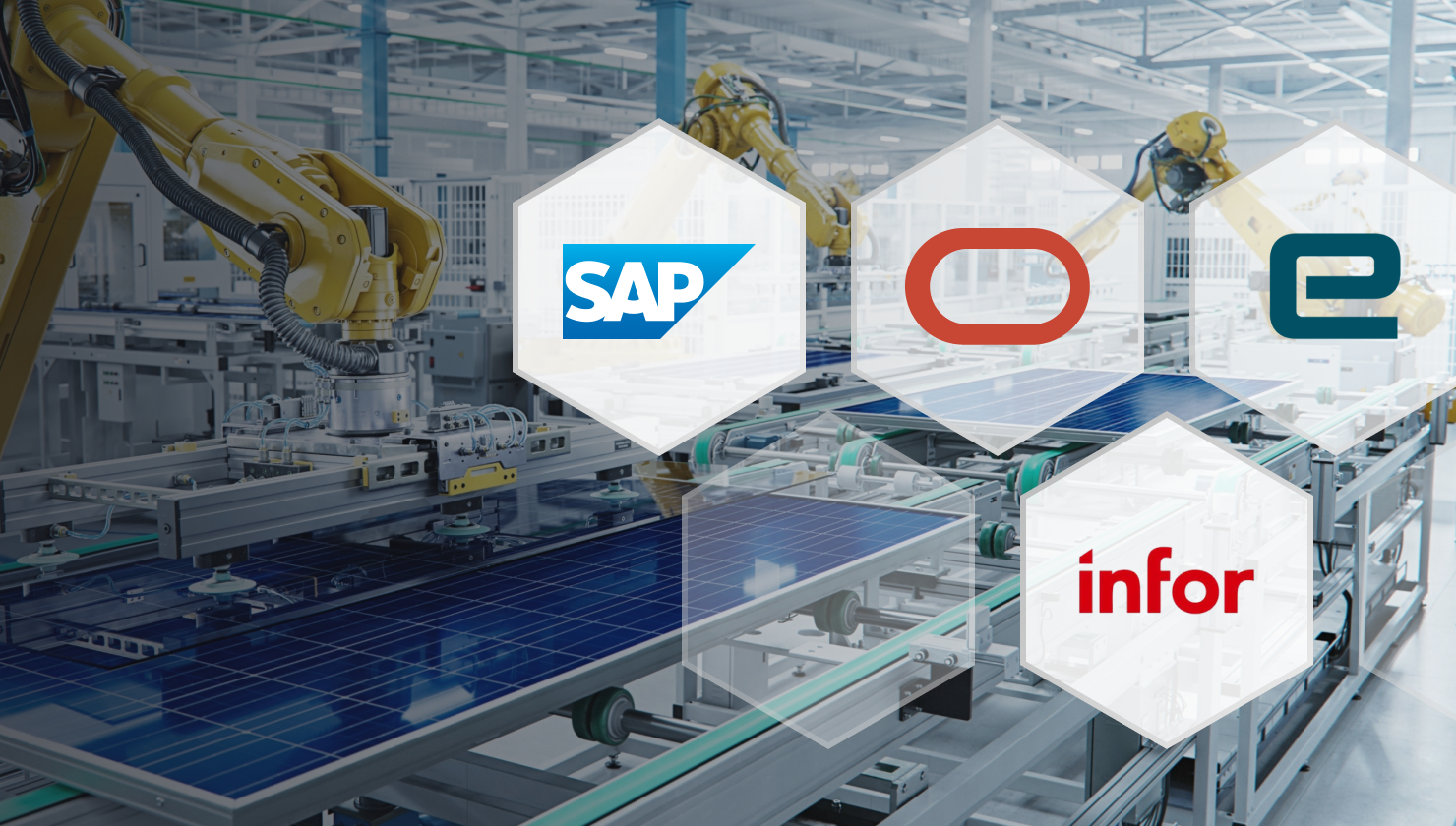
- SAP – Released SAP R/3 in 1992 (with SAP ECC 5.0 in 2004, and 6.0 in 2006). A huge number of manufacturers are still running SAP ECC 6.0. But, SAP is ending support for SAP ECC in 2027, so these manufacturers are under pressure to move to S4/HANA.
- Oracle E-Business Suite – Built on 1990s architecture. Plenty of manufacturers are still running 11i or R12 (2007), which are ancient by software standards.
- Infor LN (formerly Baan) – Originally deployed in 1996. While it's been updated and rebranded multiple times, many implementations are running versions that are 15+ years old
- Epicor – Includes products such as Vantage and Epicor 9 and 10, with deployments spanning multiple decades and versions. The company has released Epicor Kinetic (cloud), but manufacturers are sticking with Vantage or Epicor 9.
- IFS Applications – Dating back to the 1980s, with many manufacturing customers running versions that haven't been updated in years. IFS Applications 9 (for example) was released over a decade ago. IFS Cloud (2021) is being pushed, but swapping out the old is hard.
Why do manufacturers stick with these older systems? Well, these ERPs are heavily customized to their specific manufacturing processes. Updates are expensive and risky. And nobody wants to shut down production to upgrade their ERP. If it's working for their operations, why should they touch it?
Why manufacturing ERP integrations are so difficult
If you've built integrations for modern SaaS apps, integrating with manufacturing ERPs may feel like a different world entirely. Here's what makes them challenging:
Built before modern API standards
These systems were built before REST APIs and webhooks. As a result, you're often dealing with SOAP endpoints, proprietary protocols, or custom interfaces that are implemented differently for each customer. Documentation is sparse, outdated, or simply non-existent.
Massively customized deployments
Every manufacturing ERP deployment is unique. Customers add custom fields, modify workflows, and build proprietary business logic specific to their plants. What worked for Customer A's SAP implementation probably won't work for Customer B's, even if they're running the same ERP version. You can't just build a single integration that works for everybody. As a result, you're building many variations of that integration to satisfy each customer's requirements.
Complex manufacturing data models
Manufacturing data isn't simple. You're dealing with BOMs with nested hierarchies, work orders tied to specific production routings, inventory spread across any number of locations, and dependencies between all of these entities. Understanding how everything should go together takes domain knowledge that an average integration developer won't have.
On-premises deployments
A huge number (maybe as much as two-thirds) of manufacturing ERPs are still deployed on-premises or in private data centers. These systems sit behind firewalls, inside secure networks that manufacturers don't want to open up to the public. Your integration can't just hit an API endpoint over the internet. Instead, you need to securely access systems that weren't originally designed for accessibility.
Inconsistent update cycles
While your SaaS product ships updates weekly, many manufacturers update their ERP every few years, if then. You might build an integration that works perfectly, only to have it break when a customer finally upgrades its ERP years later. Or worse, you're supporting a dozen versions of the same ERP for different customers, each different enough to warrant its own integration.
The hidden costs for SaaS teams
These challenges can translate into real pain for your organization as you try to make inroads with manufacturers:
- Sales cycles stall – Your team has to hedge on integration questions or overpromise to close deals, creating problems down the line.
- Engineering loses its way – Instead of building your core product, devs are writing custom integration code for each new customer. One customer needs SAP, another needs Epicor, and a third needs Oracle. Each requires weeks or months of dev time.
- The maintenance burden grows – Every custom integration needs ongoing support. When customers update their ERPs, integrations break. When your product changes, you have to update code for scores of customer-specific integrations.
- Customer success struggles – Integration issues create support tickets, lots of them. Data sync problems frustrate customers. And when something breaks, customers blame you, regardless of the root cause.
It's not uncommon for SaaS companies to spend hundreds of engineering hours per customer on ERP integrations, with an ongoing maintenance burden that grows as new customers are added.
Traditional integration approaches fall short
Most teams try one of these approaches, and all have significant limitations:
- Building custom integrations for each customer seems fastest initially, but the maintenance costs quickly add up. It doesn't take long for you to collect dozens of slightly different integrations, each one requiring special engineering understanding to maintain and upgrade.
- Platforms like Zapier work great for simple SaaS-to-SaaS imports and exports, but they're not built for enterprise ERPs. They struggle with complex authentication and manufacturing-specific workflows, not to mention the data volumes generated by manufacturing operations.
- Traditional enterprise iPaaS solutions like MuleSoft or Boomi were built for enterprise IT teams, not SaaS companies. They have steep learning curves, expensive licensing, and they require your customers to buy and manage another tool. Plus, they don't solve the on-premises connectivity problem without complex infrastructure.
Embedded iPaaS to the rescue
This is where embedded iPaaS platforms like Prismatic really shine. Unlike traditional iPaaS solutions, an embedded iPaaS is built specifically for you to offer integrations to your customers – including manufacturers.
Here's how it works differently:
- White-labeled and embedded – The integration experience lives inside your product. Your customers configure integrations through your interface, not a separate platform.
- Reusable components – Build integration logic once, then deploy it across multiple customers with configuration rather than custom code. When you build your SAP connector, it works for all your SAP customers, but you configure it differently for each customer.
- Pre-built connectors – Platforms like Prismatic maintain connectors for many manufacturing ERPs so you're not starting from scratch. These connectors handle authentication, API versioning, and common data models.
- Customer self-service – Your customers can configure their own integrations by mapping fields, setting sync schedules, and testing connections. And they can do it without engineering involvement.
Solving the on-premises challenge
But what about that huge number of manufacturing ERPs sitting behind firewalls? This is where Prismatic's on-prem agent becomes critical.
Traditional approaches to accessing on-premise systems are fraught with problems. You might ask customers to set up VPN connections, which requires IT involvement, security reviews, and weeks of back-and-forth. Or you might ask them to publicly expose endpoints, which most manufacturers won't do for production systems.
Prismatic's on-prem agent solves this:
- Deployed inside the customer's network – The agent is a lightweight Docker container or Windows/Linux service that installs within the customer's firewall, where it can reach the ERP.
- Outbound-only connection – The agent establishes a secure connection to Prismatic's cloud platform, but only outbound. No inbound firewall rules required. The customer's IT team is happy because they're not opening ports in their network.
- Handles authentication locally – The agent authenticates to the customer's ERP using credentials that never leave the network. All the complexity of connecting to a specific ERP implementation happens inside the firewall.
- IT-friendly deployment – Installation typically takes 1-2 hours instead. The agent auto-updates and includes health monitoring, so customers don't need to actively maintain it.
- Works with existing security policies – The agent operates alongside customers' existing security infrastructure without requiring changes to firewall rules or network architecture.
This architecture means you can reliably connect to on-premises ERPs without the traditional pain. Your sales team can honestly say "Yes, we can integrate with your on-premise system," knowing your team can deliver.
The business impact is immediate
When you solve the manufacturing ERP integration challenge with the right tools, the benefits extend across your organization:
- Engineering focuses on your product. Instead of being stuck in integration maintenance mode, your devs are building the product features that help you stand out.
- Sales cycles accelerate. "Do you integrate with our ERP?" has an easy answer. You can showcase your integration marketplace to prospects and run POCs without custom development.
- Customer success improves. Customers activate and configure their own integrations and get data moving quickly. Support tickets drop because integrations are more reliable and easier to troubleshoot when there are problems.
- Faster time to market. New ERP integrations take days or weeks instead of months. You can expand into new manufacturing verticals without losing all your product momentum (because you aren't pulling devs off their regular work to handle integrations).
- The ROI is real. If you're spending 100+ engineering hours per customer on integrations, and an embedded iPaaS reduces that to 10-20 hours of setup and configuration work, you're freeing up engineering capacity and improving the customer experience.
Here's how to take on the ERP integration challenge
If manufacturing is a strategic market for your SaaS product, here's how to approach the integrations you'll need.
- First, what's your current state with reference to manufacturing clients? Which ERPs appear most often in your sales conversations? How many dev hours are you currently spending on integration work for those ERPs? What percentage of your support tickets for manufacturers are integration-related?
- Next, prioritize the highest-value integrations. Focus on the ERPs that commonly show up in deals. Start with simpler integrations that sync orders, inventory, and customer data. Build velocity with quick wins rather than trying to create deep integrations for every possible ERP right out of the gate.
- Then, implement changes strategically. Start with core ERP integrations for your most important customers. Deploy the on-prem agent for customers who need it. Employ customer-facing configuration tools so new customers can self-serve. Over time, expand your integration marketplace to let customers connect more ERPs and provide richer and deeper integration experiences.
Do this efficiently with embedded iPaaS
Manufacturing is a massive market opportunity for B2B SaaS companies, but having the right integrations is critical. And, these aren't using simple RESTful connections. Instead, they're hugely complex, often on-premise systems that require individualized approaches.
That's where Prismatic, with its on-prem agent, helps you literally bridge the divide between modern SaaS products and legacy manufacturing ERPs. Solve those integration needs now before they start blocking deals. Pursue manufacturing customers and deliver reliable ERP integrations for them without destroying your engineering momentum or derailing your roadmap.
Ready to see how Prismatic can help your team build manufacturing ERP integrations faster? Check out our demo video to see how it call comes together.