

B2B SaaS integrations are no longer optional; they’re essential for survival in today’s competitive marketplace. The modern tech stack is integrated, with the G2 2024 Buyer Behavior Report showing that integrations are a top consideration for B2B software buyers. As businesses increasingly rely on specialized SaaS solutions, the expectation for seamless connectivity between applications has become non-negotiable. The ability to connect effortlessly with their customers’ other apps makes SaaS products more appealing to both potential and current customers.
And integrations will only increase in importance and complexity. The average organization now uses hundreds of SaaS apps, creating an ever expanding list of integration requirements that influence your sales and drive your customers’ long-term satisfaction. Despite this critical importance, many B2B SaaS companies struggle with their current integration strategies – whether building in-house, wrestling with enterprise iPaaS limitations, working around unified API constraints, outsourcing to third-party devs, or managing some complex blend of these approaches.
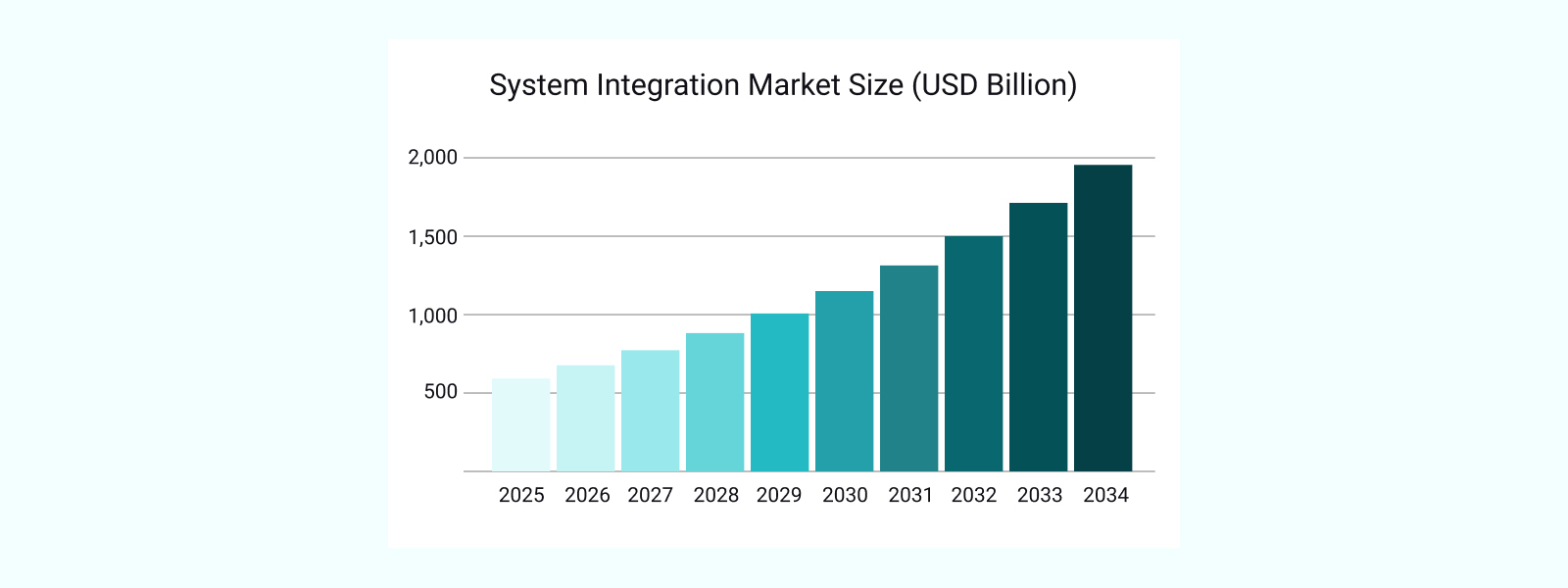
Zoting, S. (2025, May 21). System Integration market size to surpass USD 1,946.37 BN by 2034. https://www.precedenceresearch.com/systemintegration-market
As a product manager, you can’t afford to waste time and effort. But that’s what it can often feel like when you’re attempting to wrangle customer-facing integrations. It doesn’t have to be that way. There are proven patterns for integrations that protect your roadmap, keep engineering effectively engaged, and make your customers happy.
The rest of this guide examines areas where product managers who oversee B2B SaaS integrations face the most significant challenges. We’ll explore how these issues manifest for each area and demonstrate how an embedded iPaaS approach provides better solutions than traditional in-house development.
Strategy
Prioritization
Challenge
Product managers get squeezed from all sides when prioritizing in-house integrations. Numerous customer requests and limited development bandwidth make it difficult to select the most important integrations to work on. Too often, roadmaps are shaped by assumptions or the loudest customer instead of real-world data. Without clear visibility into customer adoption or business value, product managers often misallocate resources, delay launches, and overlook opportunities to deliver the integrations that provide real value to customers.
Solution
With Prismatic’s embedded iPaaS, you no longer have to guess which integrations to build. You gain visibility into adoption metrics, usage patterns, and the actual business impact of your integrations so you can prioritize based on evidence rather than assumptions. You can spot real demand through the integration marketplace and track ongoing engagement with built-in monitoring tools. Rapid prototyping lets you test new ideas, and adjust your roadmap as priorities shift – without overcommitting resources. Using data from customer feedback, sales activity, and regular reviews, you can make confident, informed decisions to ensure your integration strategy aligns with customer needs and business goals.
Value vs cost

Challenge
It’s difficult to justify the costs of building and maintaining in-house integrations against their potential business value since each integration requires a significant resource investment. As a result, product managers face difficulty making reliable business cases, often over-investing in low-return projects or missing high-impact opportunities. Traditional point-to-point solutions add hidden technical debt that compounds over time, making it even harder to forecast ROI and confidently select integrations that will expand market reach or improve customer satisfaction.
Solution
With Prismatic, you can transform the cost-value equation of integrations. Deliver more integrations with fewer resources by combining our low-code integration designer with code-native flexibility and pre-built connectors. The platform’s "build-once, deploy-many" model provides predictable costs, helping you accurately estimate ROI and forecast development timelines. Reusable code and repeatable deployment processes reduce costs as you extend product functionality. Demonstrate business value by tracking integration activations, time-to-value, and usage. Focus on the right integrations to unlock new opportunities while reducing cost and risk.
Education
Prismatic beautifully supports the model we wanted: technical support staff configure new instances of known integrations; software engineers get involved when there’s something new; support staff can monitor what’s happening day-to-day. Meanwhile, we can focus engineering cycles on adding value for our customers.
Challenge
Product managers usually become the primary resource for educating sales, marketing, and customer success teams on in-house integrations. Because these teams may lack technical expertise regarding integration capabilities, limitations, or product priorities, opportunities are missed, and customers deal with inconsistent support. Product managers must often repeat explanations, creating communication bottlenecks and diverting resources from essential tasks like product planning. This communication constraint frequently makes it difficult for internal teams to sell or support integrations confidently.
Solution
Prismatic empowers you to eliminate communication bottlenecks by giving internal teams self-service access to all the integrations. With an extensive, accessible UI, sales and support teams can explore available integrations, review capabilities, and access customer-ready resources without relying on you for every detail. The integration marketplace, low-code integration designer, and extensive docs make technical concepts accessible, so non-technical team members can confidently explain functionality and support customers. Create educational materials based on the integration deployment and management dashboards and free your time to focus on strategy.
Scaling
Challenge
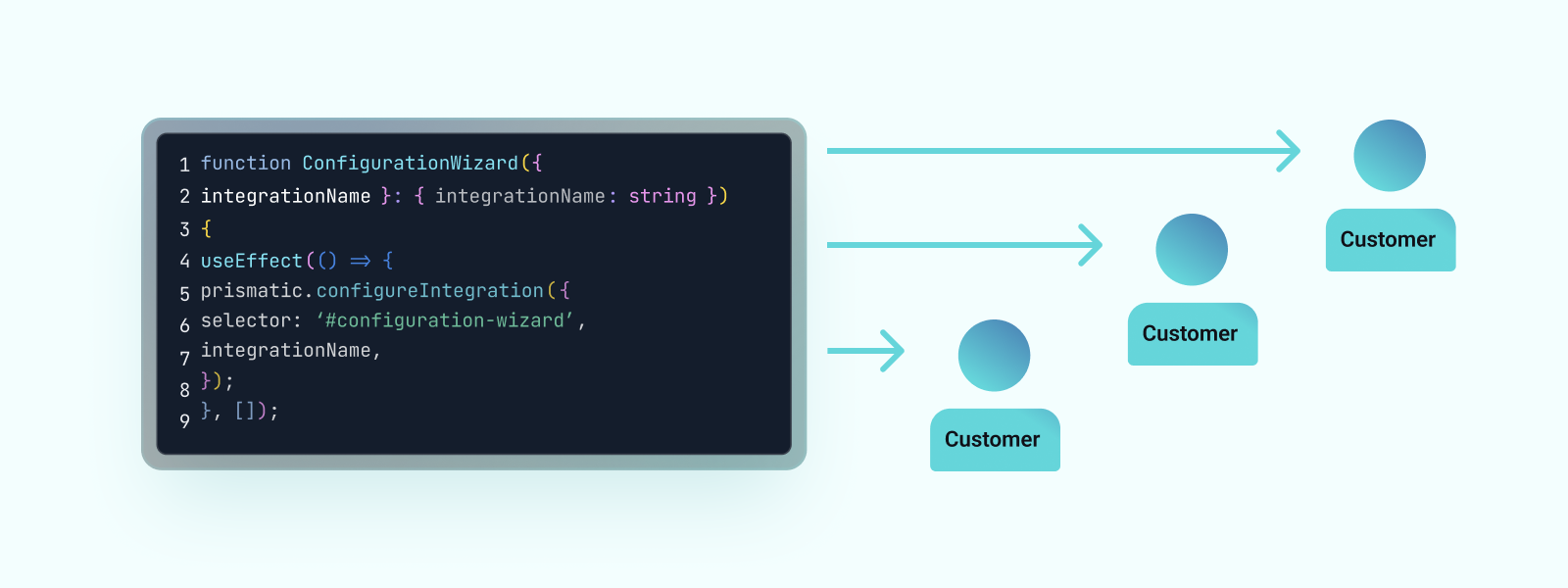
As B2B SaaS companies scale, customers’ integration needs can quickly outstrip the teams that fulfill them. The greatest challenge isn’t building integrations – it’s deploying and managing them at scale. Without a scalable framework, teams struggle to keep pace with customer demands, forcing trade-offs between speed and quality (with quality losing in most cases). And, since integrations depend on external systems that can change without warning, third-party breakages often cascade into customer unhappiness and escalating support tickets. The result? Missed opportunities and enough frustration for everyone.
Solution
With Prismatic’s embedded iPaaS, you can scale your integration strategy without scaling your team. Low-code and code-native tools let both devs and non-devs participate, so you accelerate delivery while maintaining flexibility for complex cases. The "build-once, deploy-many" model allows you to configure and reuse integrations across different customers, removing redundant work. Your customers can self-activate and configure integrations via the marketplace, while support and customer-facing teams manage deployment, dramatically easing the load on engineering. By shifting low-level work away from devs and leveraging automation, you can handle more integrations, control costs, and set your strategy for long-term growth – without hitting the wall.
Get a pdf of this guide to share with your team and keep the integration discussion going.
Development
Coordination across teams

Challenge
The in-house integration lifecycle is dependent on engineering, support, and customer success teams. These teams often have different tools, priorities, and communication channels, leaving product managers brokering handoffs and attempting to bridge communications gaps. This fragmented approach leads to slow progress, miscommunication, duplicated work, and misaligned priorities. The results are prolonged development cycles and poor customer UX, as teams lack shared ownership of integrations.
Solution
Prismatic brings all your teams into a single platform for integration development, deployment, and management. This breaks down knowledge silos, reduces the number of handoffs, and allows everyone to collaborate more efficiently. Instead of spinning up ad-hoc groups for each integration, you have a single integration lifecycle with defined roles and responsibilities. Shared access to management dashboards enables complete transparency, ensuring that teams are educated and aligned. By streamlining processes and eliminating coordination issues, you can move faster, reduce errors, and deliver first-class integrations as powerful features of your product.
Resource scarcity

Challenge
Devs are a product manager’s most valuable resource, and they’re often stretched thin. Every hour devs spend on in-house integrations is one they’re not spending on the core product. Product managers must constantly deal with constraints as engineering is pulled between core product development and integration requests, creating conflict between innovation and integrations. Limited engineering bandwidth often means integration projects get delayed or deprioritized, hurting customer satisfaction and deal closure rates.
Solution
Prismatic allows you to offload much of the development and maintenance to non-devs, freeing up your devs to focus on your core product. The platform’s pre-built connectors and low-code designer make it easy for anyone to build integrations. Devs come into the picture for custom connectors (such as with your app) and more complex integration scenarios. Our code-native experience (enhanced by AI) ensures that when your devs write connectors or any other part of an integration, they create consistent, maintainable code. Team members focus on what they know and do best, ensuring optimal resource utilization.
Technical debt

Challenge
Integration tech debt is one of the biggest negatives of building in-house. Each custom integration adds more complexity to the product, creating additional maintenance overhead and making it harder to forecast long-term costs. As integration code accumulates within the core application, updates and refactoring are increasingly burdensome, diverting resources from innovation and slowing product evolution. Instead of creating new value, product managers are left managing fragile systems that derail roadmaps and erode efficiency.
Solution
Prismatic helps you break the tech debt cycle by basing your integration strategy on a secure, scalable platform. We also separate integration logic from core product code, ensuring consistent and maintainable integrations. Our pre-built and custom connectors and "build-once, deploy-many" model drastically reduce redundant code, while configurable deployment options ensure each customer has a tailored UX. Managed infrastructure and automated updates keep integrations current and secure without constant attention from your team. You can focus on delivering new product features and updates instead of battling increasingly complex integration code. By reducing technical debt, you cut costs and gain speed and the flexibility to adapt to future customer and market needs.
Data mapping and transformation
Challenge
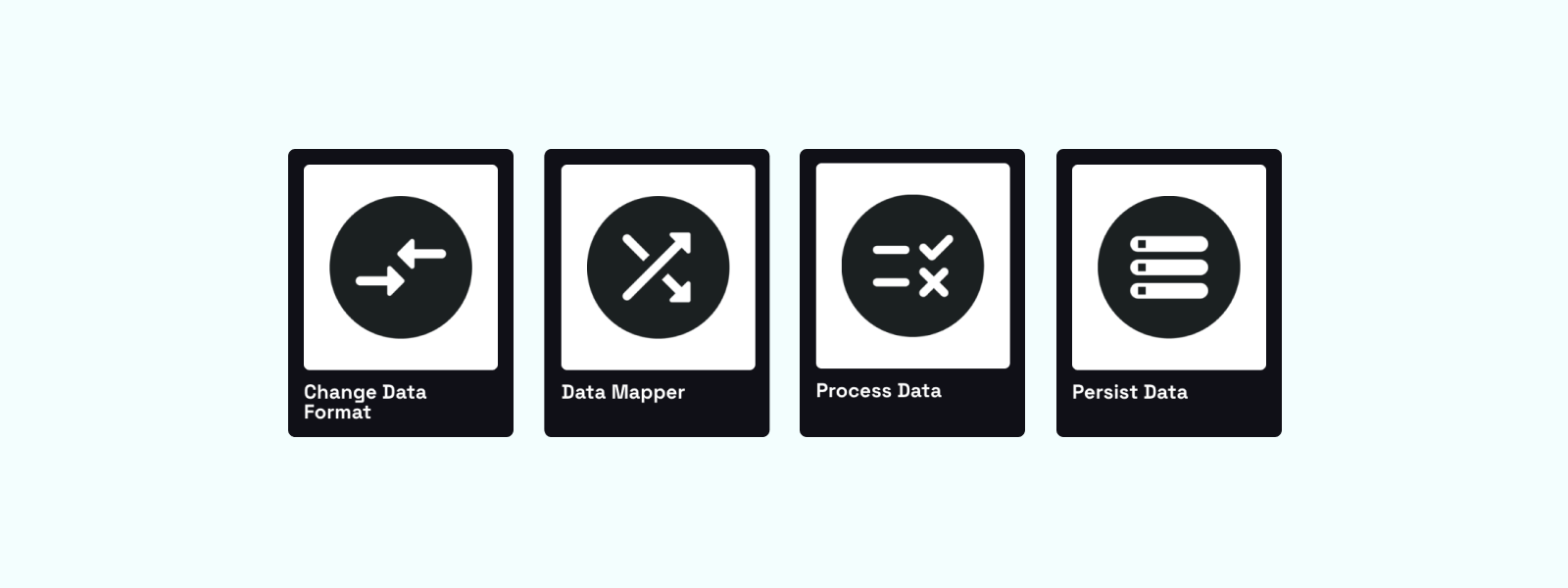
Data mapping and transformation for in-house integrations usually takes more time and effort than expected. Each customer has unique data requirements, creating scope creep, prolonging timelines, and multiplying complexity. Without standardized tools and approaches, every integration is a custom project, demanding specialized technical expertise and extensive testing – slowing delivery and increasing the probability that customer expectations will not be met.
Solution
With Prismatic, you can streamline data mapping and transformation through built-in tools that eliminate the need for custom coding. The platform offers reusable components and flexible tools – low-code for routine tasks and full-code (code-native) for advanced scenarios – so you can handle any requirement efficiently. The low-code designer empowers non-devs to map fields and apply transformations quickly. Data mapping can also be configurable per integration, giving you the ultimate flexibility to meet different customers’ unique data needs. Prismatic helps you consistently deliver your customers’ data, ensuring optimal outcomes.
Infrastructure
One-off code

Challenge
As devs build custom code for each in-house integration, they create an ever-growing library of one-off projects that product managers can’t efficiently leverage for future integration scenarios. Maintaining these solutions becomes a regular nightmare when requirements change (or the original dev leaves). Meanwhile, engineering wastes time reinventing the wheel for similar integrations, and the cycle of poor development practices continues in a desperate attempt to keep pace with customers’ integration needs.
Solution
Prismatic’s embedded iPaaS is a purpose-built, cloud-native platform with everything necessary to build, deploy, and manage integrations. The platform’s "build-once, deploy-many" architecture enables you to maximize engineering investment by creating reusable integration assets that can be configured and deployed for every customer. The platform automates activation and configuration via the marketplace, eliminating one-off efforts and allowing you to focus on oversight rather than setup details. Your integrations are secure, scalable, and reliable. Your devs can focus on business requirements for integrations instead of the plumbing.
Third-party APIs
Challenge
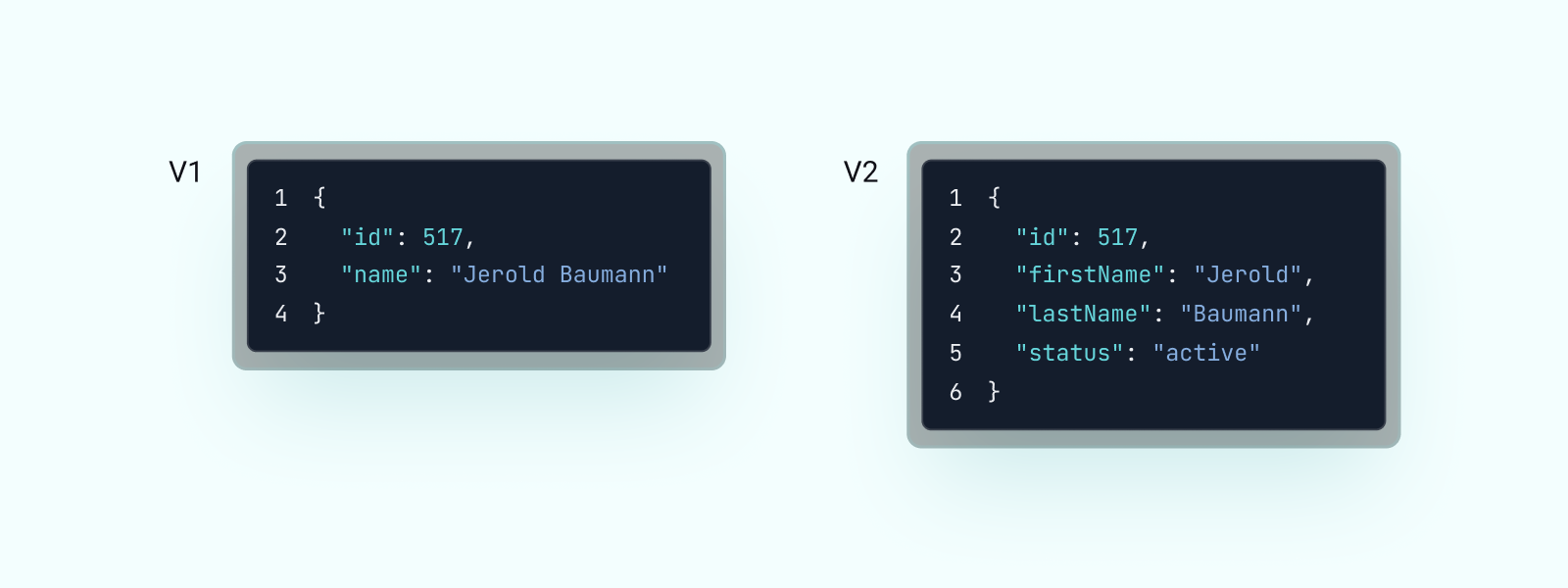
Breaking changes caused by third-party APIs are common to integrations. One API update can impact any number of in-house integrations, tying up engineering and derailing product development. Managing such issues across hundreds of customers and scores of integrations becomes messy, creating friction for everyone. Instead of focusing on strategy and growth, product managers must handle fire drills that consume otherwise-allocated resources and erode customer trust.
Solution
With Prismatic, you can stop chasing every third-party API change and protect your customers from disruptions. We handle API updates and versioning for the platform’s pre-built connectors, ensuring that integrations don’t need to depend on regular fixes from your engineering team. Built-in versioning and deployment tools allow your team to test, validate, and roll out integration updates with minimal downtime. Detailed monitoring and logging dashboards help your support team proactively identify and resolve issues when they occur. You save engineering time, reduce customer risk, and keep your roadmap moving forward instead of dealing with regular integration emergencies.
Authentication and access control

Challenge
Authentication and access control for in-house integrations can be painful. Each third-party system requires unique auth flows, creating complexity that leads to poor user experiences. Inconsistent development practices can add security and compliance concerns. At the same time, product managers are trying to ensure that sensitive customer data remains protected and that only authorized users can access integrations. Balancing security, compliance, and usability while handling numerous auth systems can be a recipe for disaster.
Solution
Use Prismatic to simplify auth and access control across all your integrations. The platform provides built-in auth support for OAuth 2.0, API keys, and other methods, removing the need to build custom auth flows for each third-party system. Granular access controls let you easily define which users and teams can access integrations, while the included auth functionality delivers a consistent, secure experience for your customers. By offloading auth management to Prismatic, you increase security, reduce compliance risk, and free your devs to focus on delivering new features instead of maintaining custom integration auth logic.
Customer expectations
Onboarding
Challenge
Excellent in-house integration onboarding experiences are the goal, but missing or unnecessarily complex integration setup processes makes achieving it impossible. Manual configs require engineering work (instead of support staff or customers), creating frustrating delays and inflating support costs. The result is a longer time-to-value, extended onboarding cycles, and unsatisfied customers. Instead of seeing the value (time savings, few data errors, etc.) integrations provide, customers encounter immediate friction, which hurts adoption.
Solution
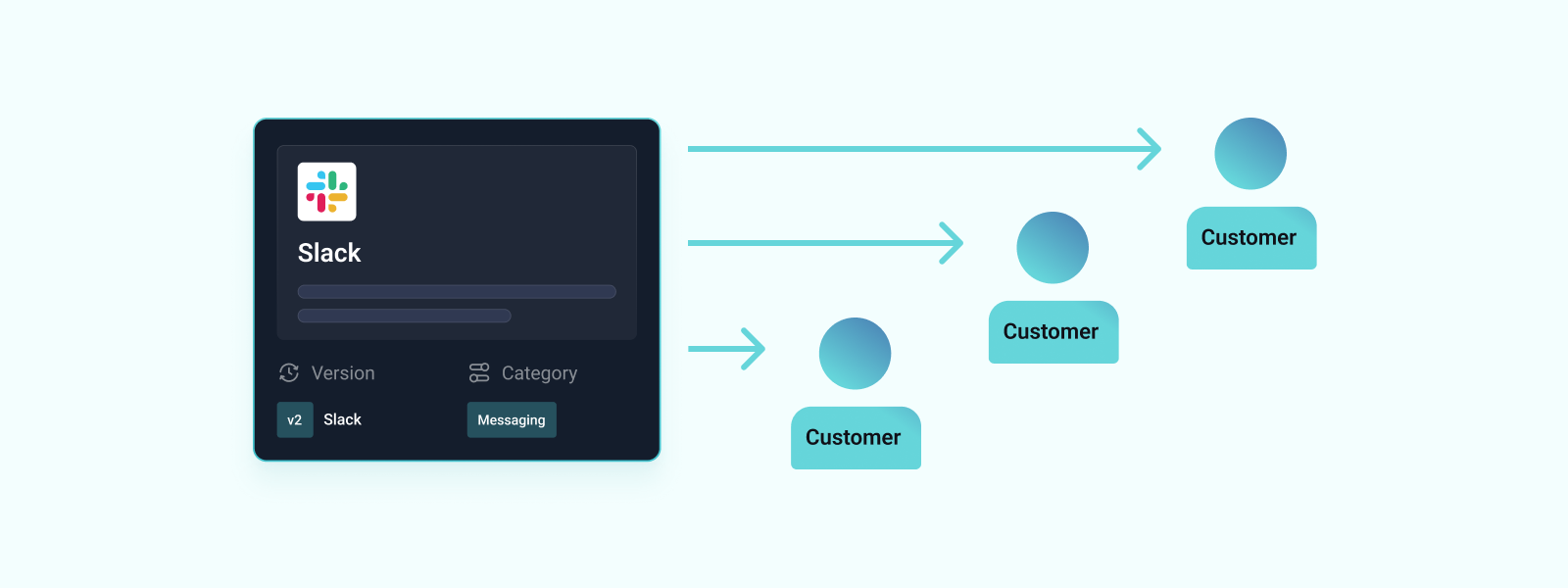
With Prismatic, you can transform onboarding into a self-service experience. The embedded integration marketplace lets your customers activate and configure their own integrations, removing technical barriers and reducing dependency on your team. Empowering customers via onboarding reduces time-to-value, improves satisfaction, and frees your teams to focus on delivering long-term success rather than navigating integration configuration matters. With Prismatic, onboarding becomes a key driver of adoption and customer happiness instead of a bottleneck.
Integration requests
[Our customers] are happy. They feel in control. They feel empowered. And [Prismatic] opens up even more opportunities that our customers haven’t even thought about. They came in wanting integration X and they see it there and they’re like, oh, look, it’s integration Y and Z. Let’s also enable those.
Challenge
Too often, roadmaps are derailed by a flood of one-off integration requests from customers, particularly larger enterprise customers with higher expectations. Each request forces a difficult trade-off: allocate resources to custom integration work or delay core product features. This reactive cycle leads to backlogs, compromises long-term innovation, and creates a roadmap shaped more by tactical firefighting than strategic priorities. As the number of integration requests grows, product managers struggle to balance customer demands with the broader needs of the customer base, slowing growth and losing product focus.
Solution
With Prismatic, you can satisfy unique customer integration needs without compromising your roadmap. Standard, productized integrations are delivered with flexible configurations to meet customer needs. In addition, our embedded workflow builder empowers your customers to create workflows themselves – so you can say "yes" to their requests without using engineering resources. These approaches to handling requests reduce roadmap interruptions, protect your team’s focus on your core product, and ensure better feature delivery for all your customers. Your customers get the tailored integrations they want, while you maintain control of your roadmap and product strategy.
Maintenance
Visibility
Challenge
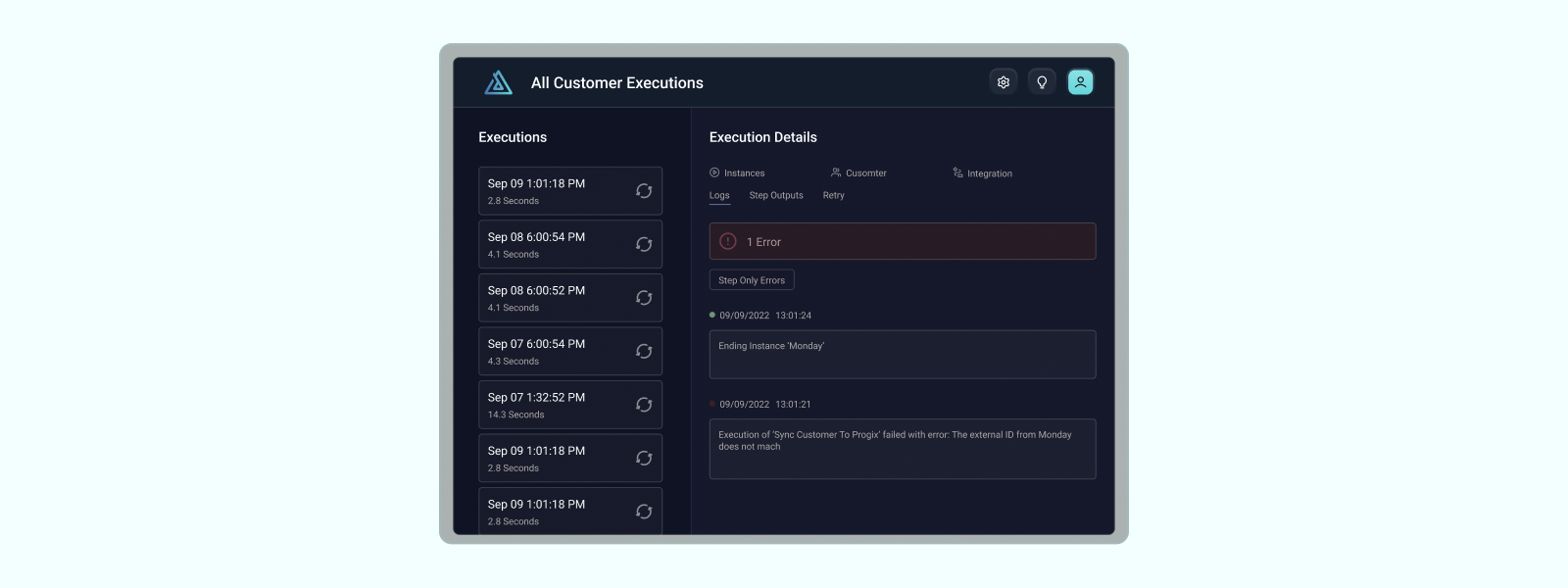
Non-devs have limited visibility into in-house integration metadata such as usage, health, and performance. Without the ability for non-devs to access monitoring and analytics data, issues are usually discovered only after customers escalate them, setting up a reactive support situation. This lack of transparency makes it difficult for product managers to troubleshoot problems, anticipate risks, or measure customer value. As a result, integrations are hard to support, customers become frustrated, and anecdotes (rather than data) are used to make decisions to add or upgrade integrations.
Solution
With Prismatic, you gain visibility into your integrations through a monitoring and management dashboard. You can track health and performance metrics, view detailed logs, and set up alerts to identify issues before they negatively impact your customers. Prismatic reduces support escalations, simplifies troubleshooting, and enables data-driven decision-making by doing away with black box integrations. The result is fewer surprises, more reliable integrations, and improved customer satisfaction.
Debugging in production
Challenge
Debugging in-house integration issues in production is very stressful and disruptive for the entire integration team. When integrations fail in production, resolution often depends on senior devs with deep technical knowledge and multi-system access, creating bottlenecks and delays. These urgent issues consume resources, derail planned product features, and add to customer frustration. Without the right tools, product managers are left with costly, inefficient troubleshooting processes.
Solution
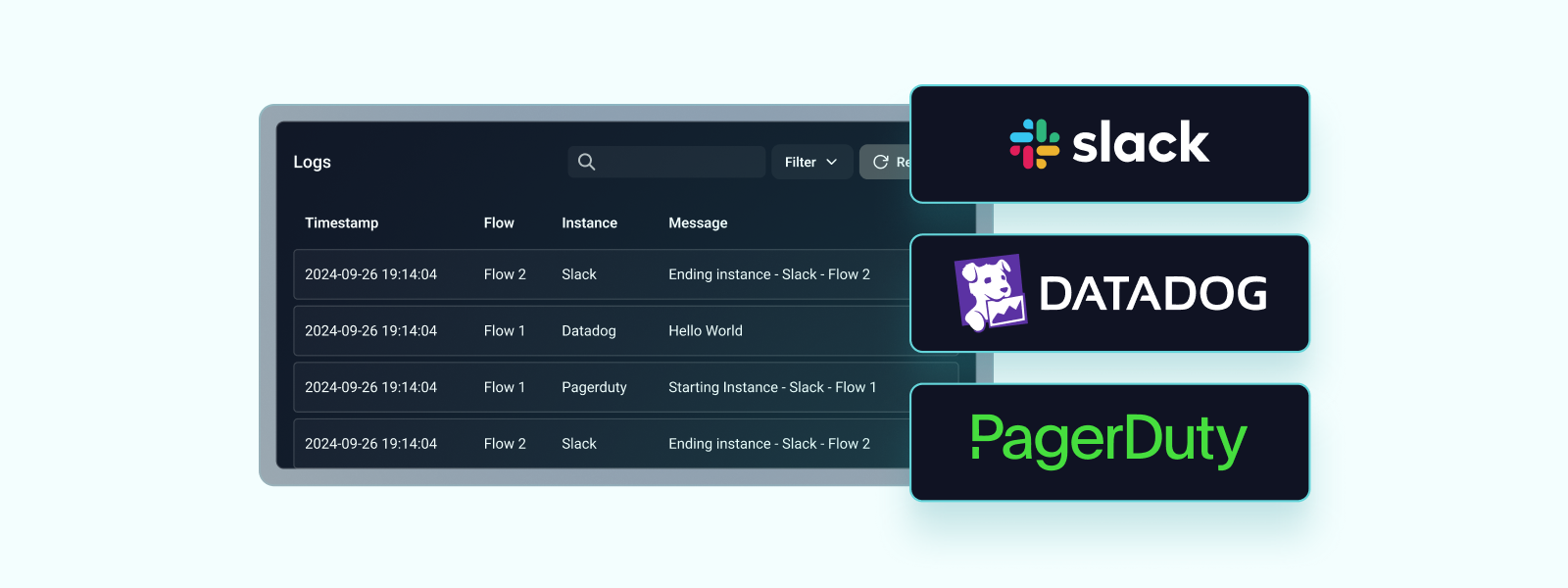
Prismatic provides your support team with the tools to resolve integration issues quickly and safely – without involving engineering in most cases. The platform includes detailed execution logs, error tracking, and an interface that makes debugging clear and accessible. You can use the replay feature to re-run failed executions, pinpoint root causes, and test fixes without disrupting production. In addition, automated retry and error-handling functions reduce the number of failures that reach customers. By streamlining troubleshooting, Prismatic saves time and engineering resources and preserves your customers' goodwill.
Go-to-market
Deal dependencies
[Prismatic] has shortened our customer POC cycles by weeks, substantially reducing our sales process.
Challenge
Sales wants to deliver in-house integrations quickly to close deals. This urgency can lead product managers to rush development cycles where devs take coding shortcuts, don’t test thoroughly, and create one-off integration infrastructure. While these integrations may work initially, teams face scaling issues, increased support tickets, and more technical debt. This constant cycle of urgent requests pulls product managers into reactive mode, derailing product strategy while creating a catalog of brittle integrations.
Solution
Prismatic enables you to meet sales deadlines without sacrificing quality. The platform’s pre-built connectors, and productized development model enable you to deliver integrations rapidly while maintaining consistency and scalability. Low-code tools allow non-devs to assemble simple integrations in record time, while code-native flexibility ensures complex scenarios are still handled correctly. Every integration you deliver benefits from standardized architecture and best-practice patterns, so even quick turnarounds are reliable. You can support your sales team’s momentum, delight customers with fast delivery, and protect your long-term product strategy.
Development time
With Prismatic, we’re able to deliver integrations in far less time while streamlining our engineering effort. Prismatic has given us the ability to more widely build integrations across our teams. It has also allowed our customer-facing teams to handle customer-specific deployment.
Challenge
Teams regularly underestimate the time and effort required to build in-house integrations. Apparently simple integration projects expand as complexities surface during development, leading to scope creep and missed deadlines. These delays cause issues for prospects, customers, and internal teams. Inconsistent integration development timelines make it nearly impossible for product managers to set accurate expectations, commit to deals, and keep the roadmap sane.
Solution
Use Prismatic to bring predictability and consistency to integration development. The platform’s pre-built and custom connectors eliminate many factors that make integration estimates difficult. An intuitive, low-code development environment helps you scope requirements accurately, while code-native flexibility ensures you can handle complex needs without blowing up timelines. By adopting repeatable development processes, you can confidently forecast efforts, set realistic expectations with sales and customers, and deliver integrations on schedule – without stressing your team.
Sales cycle
Customers come in with a laundry list of integrations … and often we already have a bunch of those integrations and it’s about slightly tweaking them for their needs. Pretty frequently there are new ones and we can confidently commit to delivering those within a few week implementation cycle versus having to schedule that months ahead into an engineering roadmap.
Challenge
Sales cycles stall due to long in-house integration development timelines. Prospects hesitate to commit until they see POC integrations or clear evidence of integration capabilities, creating friction that lengthens evaluations. Each delay gives competitors with faster or simpler options an opening to step in and close the deal. Without the ability to quickly demonstrate or deliver key integrations, product managers struggle to support sales, leading to prolonged cycles, missed quotas, and lost opportunities.
Solution
With Prismatic, you can accelerate sales cycles by making integrations a strength, not a bottleneck. The integration marketplace lets your prospects explore capabilities via self-service. The integration designer and reusable components enable rapid prototyping, so you can confidently commit to meeting requirements during the sales process and allow your sales team to showcase POC integrations in real time. Standardized deployment processes further reassure prospects that integrations will be ready on schedule. By turning integrations into a reliable part of your sales strategy, Prismatic helps you close deals faster, reduce competitive risk, and drive customer satisfaction.
How we help
We equip you and your team with versatile tools and the full benefits of a managed platform to streamline your integration strategy. With both low-code and code-native tools, robust config, and end-to-end lifecycle management, Prismatic enables you to deliver tailored integrations that meet customer needs – maximizing efficiency across product, engineering, and customer success teams to accelerate time-to-market and boost customer satisfaction.
Most critically, Prismatic offers a secure, scalable integration platform, freeing your team to focus on crafting business logic that drives adoption and retention, rather than wrestling with repetitive infrastructure tasks that slow down your roadmap.
Schedule a demo to see why Prismatic is the top choice for product managers looking to launch integrations swiftly, scale their B2B SaaS offerings, and deliver first-class customer UX.
What to look for in an integration platform
There are a lot of integration platforms out there, and sorting through them isn’t getting any easier. The usual categories – like embedded iPaaS, enterprise iPaaS, and unified APIs – are starting to blur as more vendors rush to brand everything as "AI-driven."
That said, what features will provide you with the greatest value? Here’s what you’ll want to look for in an integration platform:
Infrastructure
- Scalability features to handle enterprise-level growth and performance
- Robust security, compliance, and data governance tools
- Interoperability with existing tools and ecosystems for broader appeal
- Multi-tenant architecture for efficient resource management
Build
- Comprehensive product and user documentation for easy adoption
- Low-code designer for rapid prototyping and non-technical users
- Code-native development for complete flexibility and customization
- Custom connector SDK for building to any API
- Integration marketplace with pre-built connectors for faster go-to-market
Deploy
- Flexible deployment options to support every customer
- Built-in testing and validation tools for ensuring integration reliability
- Intuitive deployment and management UI for customer-facing teams
- Customer self-service portals for activation, configuration, and troubleshooting
- White-labeling and branding options for embedded experiences
Manage
- Reliable vendor support with SLAs for quick resolution
- Embedded workflow builder enabling customers to create one-off automations
- Advanced monitoring, logging, and analytics for usage insights
- Versioning and lifecycle management to minimize disruptions
- Usage analytics and reporting for product roadmap decisions