

Composable infrastructure has a simple premise: move efficiently by assembling proven building blocks rather than rebuilding functionality from scratch. Modern B2B SaaS products embrace this, for example, with authentication platforms, managed databases, and cloud infrastructure. As a result, you have modular services with clear boundaries. Pieces are easily replaceable without affecting the whole, and your team can build real product momentum.
Then, a dozen customers ask you for integrations.
Suddenly, the clean, composable system has a bunch of one-off, hard-coded integrations, owned by whichever engineer last touched them. Composability is lost when you need to connect with your customers' tech stack.
If modern software relies on composable architecture, your integration strategy should too. That's where embedded iPaaS comes in, with purpose-built infrastructure that handles everything that breaks at scale.
We'll get to that, but first, some context.
Integrations are essential
Integrations are critical for today's SaaS product offerings. Done right, they can drive:
- Faster time-to-value – By enabling customers to quickly connect existing systems.
- Increased deal velocity – By ensuring that customers get the integrations they need up front.
- Increased retention – By becoming fully involved with your customers' business processes.
- Expansion – By letting you target new regions or verticals.
As a result, your integration strategy is much more than an engineering decision.
Why in-house integrations aren't usually composable
Many B2B SaaS companies experience a familiar pattern:
- Devs work in-house to build a handful of "must-have" integrations for customers.
- Every deal introduces a new integration request (or five).
- Now, a customer wants a particular integration with X that probably won't work for any other customer.
By the time it reaches number three above, the team has committed to far more work than anyone initially expected. And devs are trying to become experts in:
- Auth schemas and token refresh behavior
- Rate limits and pagination rules
- Webhook setup and idempotency
- Customer-specific data models
- Replays and retries
By the time everyone understands what's happened, devs and DevOps are operating a growing distributed system with dozens of integrations that don't share deployment processes, build tooling, data governance, or support dashboards.
Why an API for your customers isn't enough
You might look at the potential chaos of building in-house and wonder whether it would make sense just to set up a solid API and let your customers create all the integrations they want with your product.
However, while lightweight automation tools such as Zapier may handle some B2B SaaS integration needs, most products require native integrations that are secure, scalable, and built with the same attention to detail as the rest of the product.
When integrations are part of your product experience, customers expect:
- In-app setup without additional logins
- Clear visibility into integration status and execution
- Role-based access and audit trails
- Tenant-aware behavior and isolation
- Troubleshooting that doesn't require engineering every time
- Consistent UX across your integrations.
Homegrown scripts and generic automation tools can't deliver that experience at scale.
You need more than a first-class API that's exposed to your customers. You need an embedded iPaaS.
The layers of a composable platform for integrations
An embedded iPaaS like Prismatic gives you three reusable layers:
- Connection – Connectors with built-in auth, pagination, rate limits, etc.
- Orchestration – Triggers, branching, filtering, data transformation, and more.
- Customer UX – Config screens, logs, alerts, all inside your product.
Put these layers together with the necessary business logic, and integrations become product features you can build, deploy, and manage reliably.
Make integrations composable
Instead of treating every integration as a custom development project, treat it as assembling pieces on a foundation (a platform) that includes everything that breaks at scale.
That's what an embedded iPaaS enables.
When prospects ask, "Can you integrate with X?", your answer shifts from "Let me check with engineering" to "Yes. An integration like that usually takes a couple of weeks."
Here's what changes:
- You don't constantly rebuild code. Things like retries, idempotency, and auth token management are all platform capabilities, not functionality written afresh for every integration.
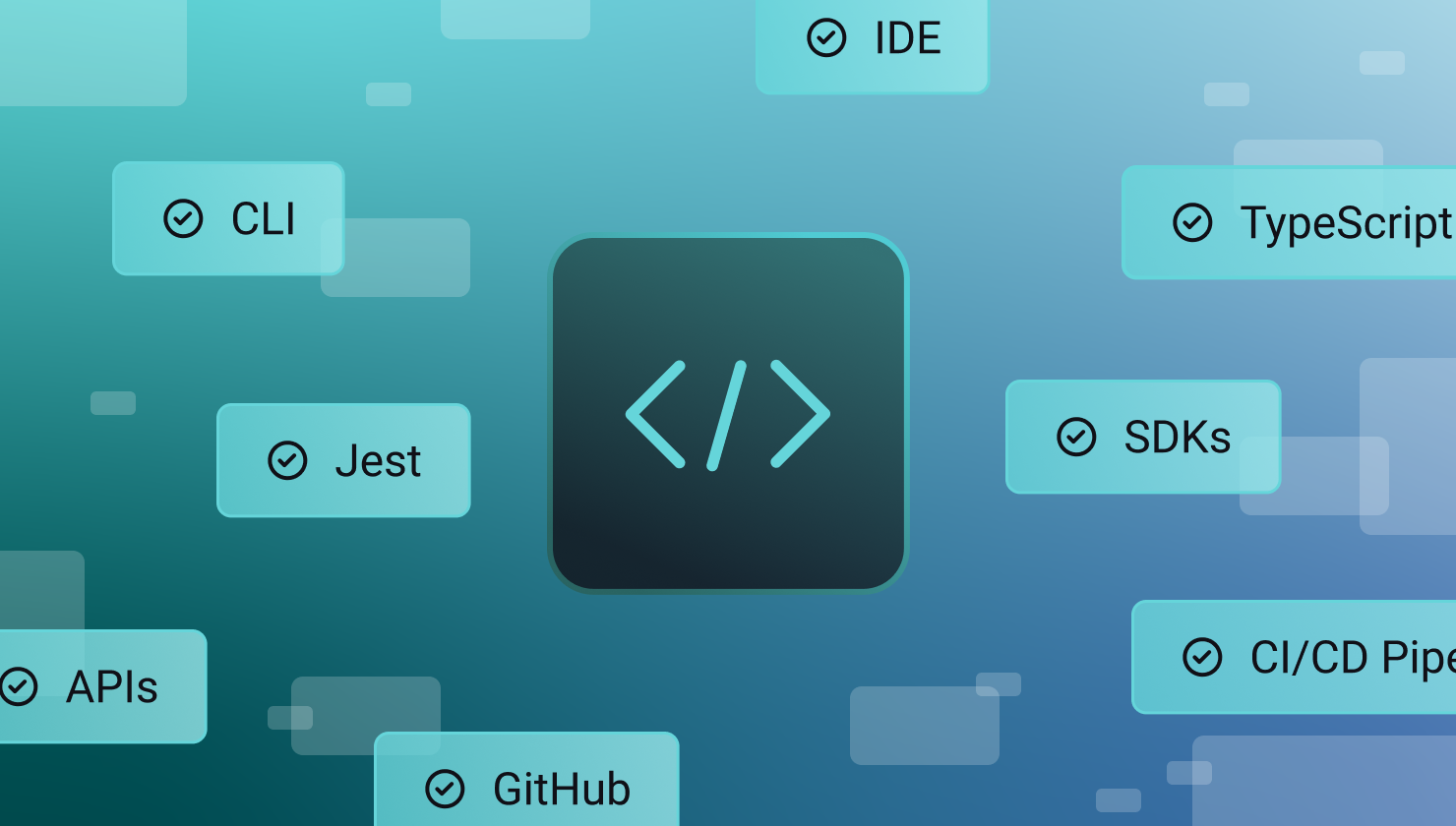
- You build the way developers want to work. Write integrations in TypeScript in your preferred IDE, accelerated by AI coding agents. Or use low-code when it makes sense, for added flexibility.
- You ship faster. The first integration might be a meaningful effort. But instead of each new integration taking the same amount of time, you become more efficient as you build reusable connectors, create templates, and establish repeatable operations and support processes.
- Support does its job. With detailed logs and a visible execution history, your support team can handle most integration-related issues without involving engineering.
- Customers get a first-class experience. They have visibility into the details of their integrations. And every integration looks and feels like part of your product.
Embedded iPaaS is the key
Composable architecture works because it acknowledges a reality: your team (devs and non-devs alike) need to focus on building what differentiates your product and leverage the right building blocks for the rest.
An embedded iPaaS is the composable building block for integrations.
It moves your SaaS product from a standalone product into a flexible platform that can support any customer's tech stack, without turning engineering into a full-time integration workshop.
Take a look at how Karbon used Prismatic to turn integrations into a competitive advantage instead of a constant drain on resources.