Solution benefits

Free up Dev Time

Prismatic's embedded iPaaS reduces the integration workload for B2B SaaS engineering teams by routing the work that doesn't require code (deployment, configuration, monitoring, and customer-facing troubleshooting) to the non-technical teams already closest to it so that devs can stay focused on core product work.
Low-code integrations for non-devs
Low-code building

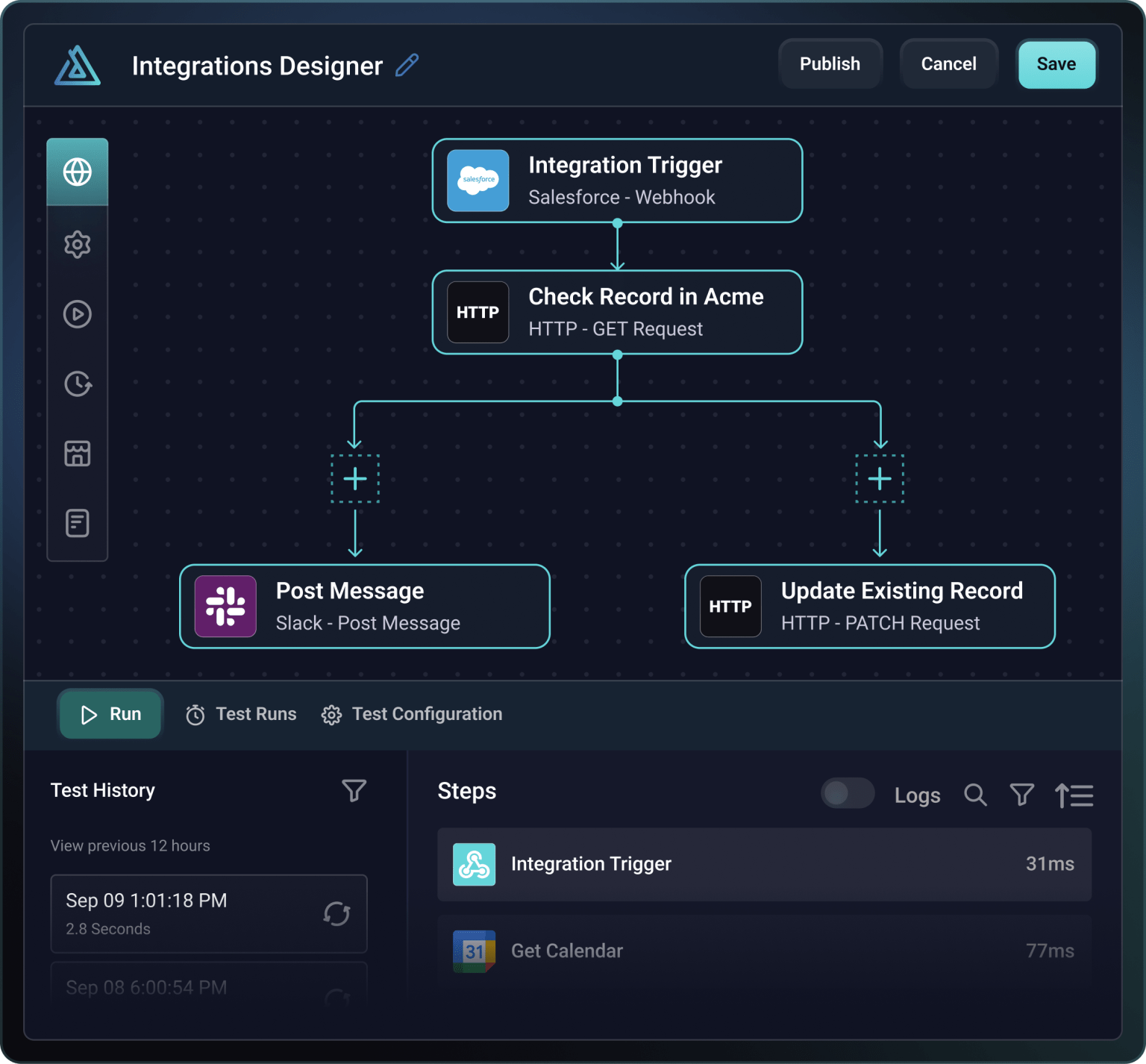
Intuitive low-code designer

Our low-code designer lets non-devs build powerful integrations ranging from simple to complex. Auth and versioning are handled along with a built-in testing framework.
Integration workflow
Pre-built templates

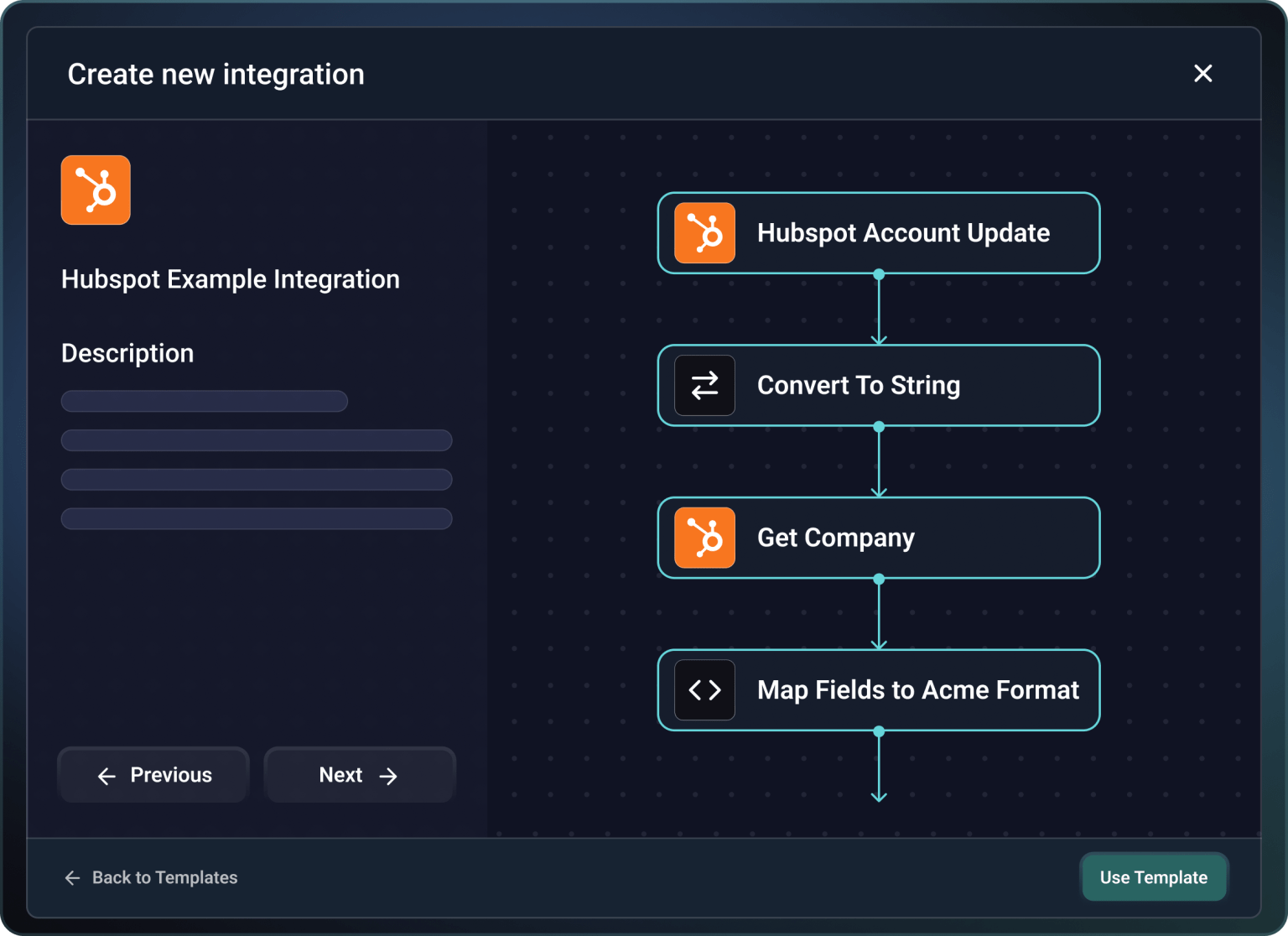
Build with integration templates

Want to build an integration but unsure where to begin? Use pre-built integration templates for common APIs to give your team a head-start.
Image
Straightforward config

Configure and deploy integrations

Define a clear and powerful configuration UX that makes it easy for non-devs to deploy integrations to customers. Set config options, enter auth, and activate! All without involving devs.
Google Calendar Connection
Powerful dashboards

Support integrations with ease

With our comprehensive dashboards for integrations and customers, your non-devs can stay current on who has which integrations activated.

They can also see when there are issues and jump right in with config, logging, and alert data to get things sorted.

Image

Common questions

Prismatic reduces engineering workload by handling the things that break at scale: authentication, multi-tenant deployment, monitoring, security, and compliance. Your devs no longer need to build or maintain OAuth flows, retry logic, credential management, or worry about scaling the infrastructure. The platform provides 190+ pre-built connectors with fully managed authentication, enabling you to build common integrations right away. 

Customer-facing teams can deploy and configure customer-specific instances without dev involvement, using configuration wizards built into each integration. Technical support staff monitor and manage instances, while devs only get involved when building something new. Teams report saving substantial engineering time, allowing devs to focus on core product features and new integration capabilities rather than integration maintenance and updates.

Get a Demo

Ready to make your product extensible?

Join teams from Fortune 500s to high-growth startups that turned integrations into a growth driver and made their products the foundation that customers build on.